SEAN ROBINSON · PhD
Thirty years finding the signal inside the noise.
I lead machine learning, AI, and data science teams in Seattle. Before that, I spent a career pulling faint signatures out of noisy detectors- gamma-ray telescopes, radiation sensors, anomaly detection for national security. It's a new AI world, but the math hasn't changed.
Recent writing
Technical papers, code, and working notes on applied AI, written from the trenches- including how the systems actually behave in use.
Empromptu FreeAgent
The free, local, entirely private agent coding system, by Empromptu!
Github ↓
Technical AI-Use Primer
This document is a practical primer for anyone who wants to use modern AI language models more effectively. It covers how LLMs actually work at a conceptual level, what they are and are not good for, and concrete guidance on prompting, tooling, and workflow as of mid-2026.
Download PDF ↓
The Context Rot Problem
Why AI coding agents get worse as a session runs — and a proposed architecture, Progressive Prompt Ephemerality, that resolves the tension between token-caching economics and model performance.
Read the Paper ↓
View the Deck ↓
PACTS: Power-Aware Compute and Training Suite
A software-first response to the AI data center power crisis — restructuring distributed training itself to smooth the power swings that are currently solved with batteries and waste heat.
Download PDF ↓
Research Threads
Cosmology
I originally did my PhD in computational astrophysics, working on the Gamma-Ray Large Area Space Telescope. I wrote some of the algorithms used to make the latest gamma-ray sky catalog, and put some limits on extragalactic diffuse gamma radiation.
Nuclear Energy
I worked in Computational Nuclear Physics after my dissertation, from Monte Carlo simulations to physical gamma-ray and neutron detectors in radiation labs. Beyond detectors, I am deeply optimistic about the future of fission and fusion energy.
Machine Learning and Artificial Intelligence
I’ve been in the AI R&D space for around 13 years now. Some of my earliest work was the development of Deep Neural Net Autoencoders for Anomaly Detection. Moved on to computer vision, predictive models,GANs and generative models. Today, a lot of energy is on LLMs, and a lot of my work is in context engineering and adaptive AI systems.
Robotics and Autonomous Systems
Physical simulations and Reinforcement Learning are key to the future of robotics, and I’ve had experience in both fields, as well as being a tinkerer on robotics systems.
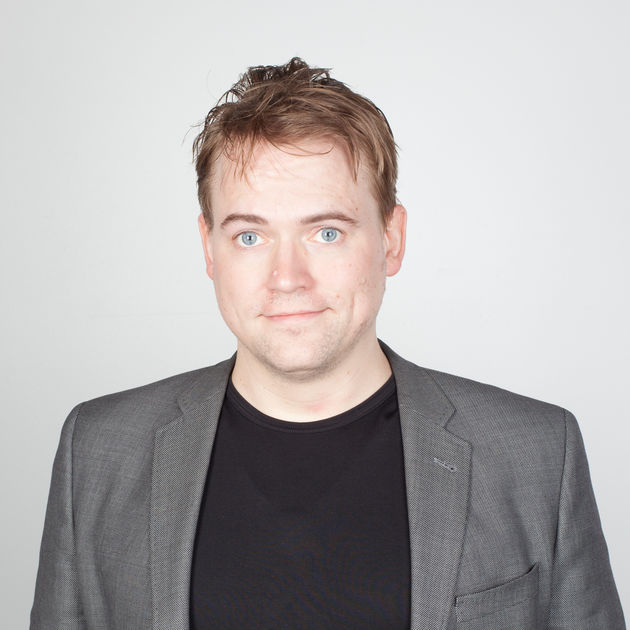
Sean Robinson, Ph.D.
Sean leads machine learning, AI, and data science teams in Seattle. Before moving into applied AI, he spent decades pulling faint signatures out of noisy detectors: gamma-ray telescopes, radiation sensors, and anomaly-detection systems built for national security work. That background is what keeps pulling him back to the mechanics underneath modern AI systems — attention, context, and the economics of running these models at scale.
His writing sits at the intersection of those two careers: practical, skeptical of hype, and more interested in how a system actually behaves under load than in how it's described in a product announcement.
Credentials
- CTO & Co-Founder
- Ph.D., Astrophysics
- AI Research Scientist/Founder in Residence
- Principal Research Scientist/Research Lead
- Principal Data Scientist
- Senior Staff Scientist, Data Sciences & Analytics
- Gamma-ray telescope program
- 40+ published technical papers
- Several issued patents
- Advisory board member
Recorded talks
Get new field reports by email
Occasional notes on applied AI, agent systems, and detection. No spam, unsubscribe anytime.